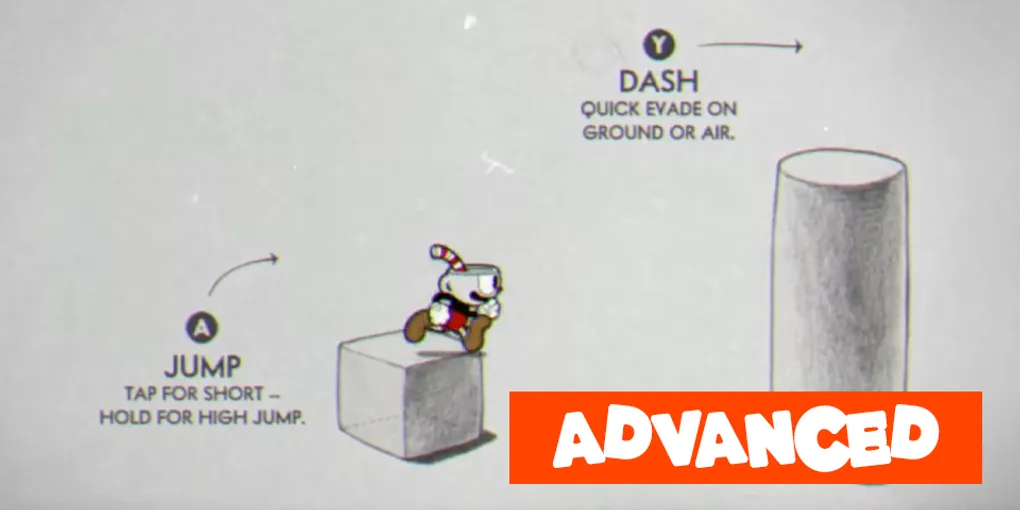
The game tutorial acts as an essential tool during the onboarding process for a new player to any game. Through guided play with defined instructions, these initial experiences look to ensure that the player comes away with a good level of understanding for how they should expect to navigate and interact with the game world. The importance of game tutorials is reflected in a wide-reaching pool of academic literature, which explores how different approaches to tutorialisation supports learning, and affects engagement, retention, and flow.
Early Experiments in Teaching Play
The beginning of the modern era of tutorial study can be attributed to Andersen et al. (2012), whose seminal study includes one of the largest controlled experiments in the field. A jaw-dropping 45,000 players provided data as they interacted with three original online games, each with a different complexity level, and individual contrasting features. The study concluded that tutorials were generally most useful when a game was unconventional or complex, whereas in simpler games, they made little measurable difference.
Crucially, Andersen and colleagues broke down tutorial design into four experimental variables that became the foundation for later research:
| Variable | Description |
|---|---|
| Presence | Whether a tutorial exists at all. |
| Context-sensitivity | Whether instructions appear during play or are grouped externally (e.g., in a manual). |
| Freedom | Whether the player can move freely during the tutorial or is restricted. |
| Availability of Help | Whether players can access optional guidance or hints. |
These categories helped transform tutorial design from a creative problem into a measurable system—one that future researchers could build upon by developing an essential taxonomy.
Flow, Frustration, and First-Time Players
A core metric for games experience is the self-reporting of a player’s feeling of flow, a deep state of focus where time and self-consciousness seem to disappear (Csikszentmihayi, 2014; Sandham, 2025). It is a common concern that tutorials can negatively impact flow due to their intentionally slow speed, overly methodical or deliberate descriptions and instructions, and how they stand separated from the core game experience.
Passalacqua et al. (2020) explored a tutorial’s impact on flow, testing whether the initial period in a mobile RPG hindered immersion. They found that tutorials could momentarily break flow, but that interestingly players were comfortable to tolerate this if they felt meaningful gameplay awaited on the other side - indicating a threshold period where players were willing to suspend expectation (suggested at around 7 minutes). Additionally, the study highlighted player expertise as a major factor: experienced players found tutorials more disruptive than newcomers.
In essence, a player’s relationship with tutorials depends not just on design, but on expectation that a tutorial will occur at the beginning of a game, the level of previous skill in the given genre, and the social contract signed upon starting an experience that we believe will be entertaining in the long run. For some, tutorials are a tolerated friction - whereas for others, they’re essential instructions and reassurance.
The Implicit vs. Explicit Debate
There’s no one-size-fits-all approach to tutorialisation, and a number of different interpretations exist. As with teaching, the use of supportive media can help users across a range of learning styles (i.e. an embedded video can help a visually-motivated learner as opposed to written or spoken word, etc). For games, as an experiential and interactive media type, we also have the option of deciding in which way a tutorial is framed - as an aside, or as an essential game experience.
The “implicit” or “explicit”-ness of a tutorial is determined by how embedded the tutorial is into the game experience. In an example - for a jump mechanic, does a designer create a room with a big drop in it with a comically large sign saying “X to jump”, or do they design an experience where jumping is the only way to solve the puzzle and allow the user to discover this themselves without gauche instructions?
The question of how tutorials should be delivered, obviously or invisibly, has driven more recent research. Cao and Liu (2022) took a straightforward approach: they built two versions of the same game: one that taught directly, and one that taught through experience. They found that explicit guidance helped when the mechanics grew more complex, but when the design itself was intuitive, players often learned just as effectively without it. Interestingly, less experienced players weren’t particularly hindered by the subtler version, a finding that contradicts our earlier researcher Passalacqua et al. (2020), who argued that new players generally rely on direct, explicit instruction. This suggests that some novices may be more adaptable than expected when the game design naturally encourages experimentation, or that a newbie’s experience of implicit vs explicit tutorial design is equally as unfamiliar.
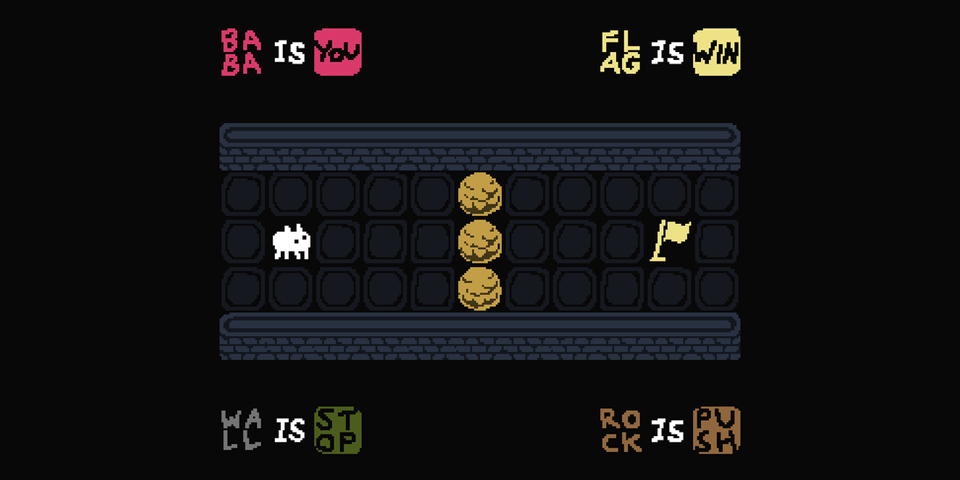
A later study by Anderson et al. (2024) took this experiment into the commercial space, modifying levels from the acclaimed puzzle game Baba is You. The team compared a traditional “instructional” tutorial with a version that taught through discovery. Surprisingly, there was no significant difference in player comprehension or retention. The reason, they argued, lay in craftsmanship: when a game’s design is already intuitive, it teaches itself.
Building a Modern Taxonomy
While early research explored the impact of tutorials, more recent work has tried to categorise them. Benvenuti et al. (2023) combined parameters from Andersen et al. (2012) and Paras (2006), expanding them into a full taxonomy of fourteen elements—covering everything from voiceover to control customisation.
| Source | Parameter | Description |
|---|---|---|
| Andersen et al. (2012) | Tutorial Presence | Whether the game includes a tutorial. |
| ” | Context Sensitivity | Whether instructions appear only when relevant. |
| ” | Freedom | Whether players retain agency during the tutorial. |
| ” | Availability of Help | Whether the game detects and responds to player need. |
| Paras (2006) | Printed | Whether printed documentation is provided. |
| ” | On-screen Text | Whether instructions are shown as text. |
| ” | Voice | Whether voiceover guidance is used. |
| ” | Video | Whether mechanics are explained via cutscenes or clips. |
| ” | Helping Avatar | Whether an in-game assistant supports learning. |
| ” | Controller Diagram | Whether control mapping is displayed. |
| Benvenuti et al. (2023) | Command Scheme Customisation | Whether players can change control bindings. |
| ” | Skippable | Whether tutorials can be bypassed. |
| ” | Story Integration | Whether the tutorial is embedded in the narrative. |
| ” | Practice Tool Presence | Whether players can safely experiment (e.g., sandbox mode). |
Their taxonomy, tested across thirty-two FPS games, reflected a more holistic view of tutorials as designed experiences rather than static instruction. It acknowledged the reality of modern development, where audio-visual design, accessibility, and player agency all shape how players learn. The list offers an overview of a modern developers toolkit for designing tutorialised experiences, but doesn’t claim to provide an exhaustive overview - and more approaches will inevitably be uncovered as tutorial design continues to evolve.
What the Literature Tells Us
Taken together, these studies begin to paint a picture of what makes a tutorial effective. As expected from academics - no single paper acts as a smoking gun dictating that “explicit instruction are better” or that we should “let the player discover it themselves”. Instead, effectiveness appears to depend on the relationship between the instruction, the mechanic being taught, the quality of the game itself, and the player receiving it.
Several themes emerge across the literature:
-
Complex mechanics benefit from instruction. Tutorial guidance becomes particularly valuable when players are being asked to understand more complicated systems or interactions (Andersen et al., 2012; Cao & Liu, 2022).
-
Player experience matters. Inexperienced players can benefit from both implicit and explicit instruction, while implicit approaches may be less effective when players lack the prior knowledge needed to interpret them (Passalacqua et al., 2020; Cao & Liu, 2022).
-
Teaching does not necessarily undermine the experience. For experienced players in particular, completing a tutorial need not come at the expense of flow or immersion, provided the learning process remains within an acceptable threshold of expected learning time (Passalacqua et al., 2020; Anderson et al., 2024).
-
Tutorials cannot be separated from the game around them. Genre, instructional approach, learnability and the player’s intention to continue playing all influence whether an instructional approach succeeds (Andersen et al., 2012; Benvenuti et al., 2023; Kao et al., 2021).
The result is a picture of tutorial design that is considerably more nuanced than the familiar distinction between telling and showing. A good tutorial is not simply one that communicates information clearly; it is one that communicates the right information, in the right way, to the right player, at a point where that information is useful.
But there is a conspicuous gap in this picture. While the literature gives us increasingly useful ways of describing when tutorials work and what characteristics they contain, considerably less attention is paid to the instruction itself as a pedagogical act. What does it actually mean to teach a player? How should the sequence, difficulty and form of an instruction be designed if we approach the tutorial as a learning experience rather than simply a collection of onboarding features?
This question becomes particularly interesting when tutorials are considered as designed, dynamic, or even adaptive experiences rather than static instruction.
Further thoughts
Looking ahead, emerging technologies such as procedural personalisation and adaptive AI hold potential to reshape how players learn. We may soon see tutorials that adjust dynamically to behaviour, confidence, or even emotional response (science fiction?). Systems that teach with the same sensitivity and creativity that great designers bring to the rest of the game.
I’ll return to this in a forthcoming article exploring my fancy-pants telemetry-driven trait classification system and application of a designed heuristic experience based on the predicted personality of the player at a set intervention point; all inside of a modern RTS tutorial context.
I’ll also be delighted to share in detail how it didn’t work.
Andersen, E. et al. (2012) ‘The impact of tutorials on games of varying complexity’, Proceedings of the SIGCHI Conference on Human Factors in Computing Systems (CHI ’12), Austin, Texas: ACM, pp. 59–68. doi: 10.1145/2207676.2207687.
Anderson, C.G. et al. (2024) ‘Show or Tell? A Comparison of Direct Instruction Tutorial and Learn By Doing Increased Impasse Versions of Initial Levels of a Puzzle Game’, Proceedings of the 19th International Conference on the Foundations of Digital Games (FDG 2024), Worcester, MA: ACM, pp. 1–9. doi: 10.1145/3649921.3650021.
Benvenuti, D. et al. (2023) ‘An Approach to Assess the Impact of Tutorials in Video Games’, Informatics, 10(1), p. 6. doi: 10.3390/informatics10010006.
Cao, S. and Liu, F. (2022) ‘Learning to play: understanding in-game tutorials with a pilot study on implicit tutorials’, Heliyon, 8(11), p. e11482. doi: 10.1016/j.heliyon.2022.e11482.
Chen, J. (2007) ‘Flow in games (and everything else)’, Communications of the ACM, 50(4), pp. 31–34. doi: 10.1145/1232743.1232769.
Csikszentmihayi, M. (2014) Flow and the Foundations of Positive Psychology. Dordrecht: Springer.
Paras, B. (2006) Learning to Play: The Design of In-Game Training to Enhance Video Game Experience. Burnaby, BC: Simon Fraser University.
Passalacqua, M. et al. (2020) ‘Demystifying the First-Time Experience of Mobile Games: The Presence of a Tutorial Has a Positive Impact on Non-Expert Players’ Flow and Continuous-Use Intentions’, Multimodal Technologies and Interaction, 4(3), p. 41. doi: 10.3390/mti4030041.
Sandham, A. (2025) Teaching Video Game Design Fundamentals: A Guide for Educating with Practical Examples and Learning Materials. Oxon: CRC Press.