The National Student Survey results are a critical moment embedded towards the end of the academic year. For academics, they provide a snapshot of how our graduating level 6 students have experienced their time at university: from teaching and assessment, through to organisation, support, and the wider sense of belonging created around a course.
In 2026, the games team at the University of West London was delighted by our results.
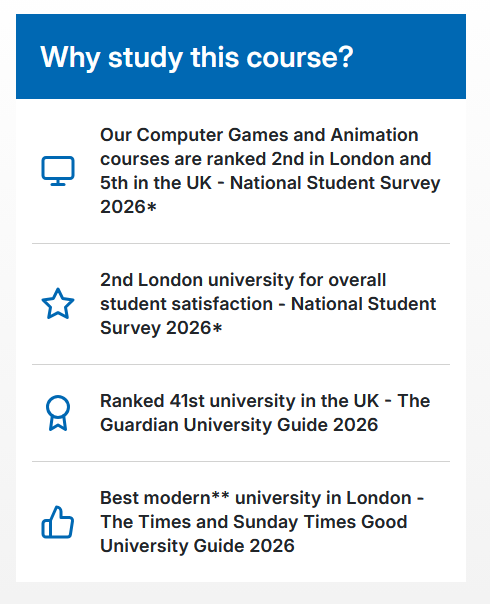
Headlines (Course)
- 2nd in London and 5th in the UK for Computer Games and Animation
- Above benchmark on every theme in the survey
- Outperformed benchmark by 10%+ on “Teaching on my course” and “Learning opportunities” themes
- Outperformed benchmark by ~20% on “Student voice” theme
Headlines (Institution)
- 2nd in London, 5th in England, and 8th in the UK for Student Satisfaction
While these results are a fantastic achievement, and look great on the website, it is important to examine what they represent. In my opinion, they are the result of six years of bold development around the course’s foundational principles.
A Brief History of Games at UWL
Discovering the past of Game Development in London School of Film, Media and Design requires us to dive into a murky pre-SEO era, where concrete dates are difficult to uncover. The 2011 institutional rebrand from Thames Valley University to University of West London also created an effective data event horizon.
I was able to find archival references to a BA Game Development from as early as 2007, mostly in the form of alumni LinkedIn profiles (I hope that they are now living prosperous lives and don’t mind my late-night profile snooping). This makes sense - I met some of my closest colleagues and friends while studying from 2010-13, a couple of whom were on this course. Long-term academics within the school remember the course as popular around 2010, but I’ve been unable to ascertain many further details.
I did discover one more artefact: a 2007 reference for “Dare To Be Digital”; a game jam team including Thames Valley University students - although this isn’t a smoking gun proving that these students were studying games.
As far as the available evidence suggests, the course was closed by academic year 2014/15, before a new approval for BA Games, Design and Animation, with a deliberate shift in curriculum emphasis toward animation, was completed in LSFMD around 2018. Around the same period, School of Computing and Engineering established or refreshed BSc Computer Games Technology - a technically-minded games computing degree which had its first intake in AY 2018-19.
Two years later, in academic year 2020-21, my colleague Jay-Won Shin completed the move from the London College of Music to course leadership of Games, Design and Animation, and was slowly joined by hourly paid staff over the following years - including myself in September 2021.
As the new teaching staff laid their mark on the course content, the technical demands of the curriculum increased - and it was accepted in 2023 that the course transition from Bachelor of Arts, to Bachelor of Science to reflect this. Modules underwent substantial changes over a five-year period, gradually moving beyond some of their original intentions. In fact, the redirection of the course toward more technical outcomes had resulted in a large jump from the course’s core animation offering that presented increasing challenges for curriculum coherence, applicant expectations, and graduate identity. However, it was a popular course, and it was getting results - students were graduating as confident generalists who felt generally happy with the teaching that they had received.
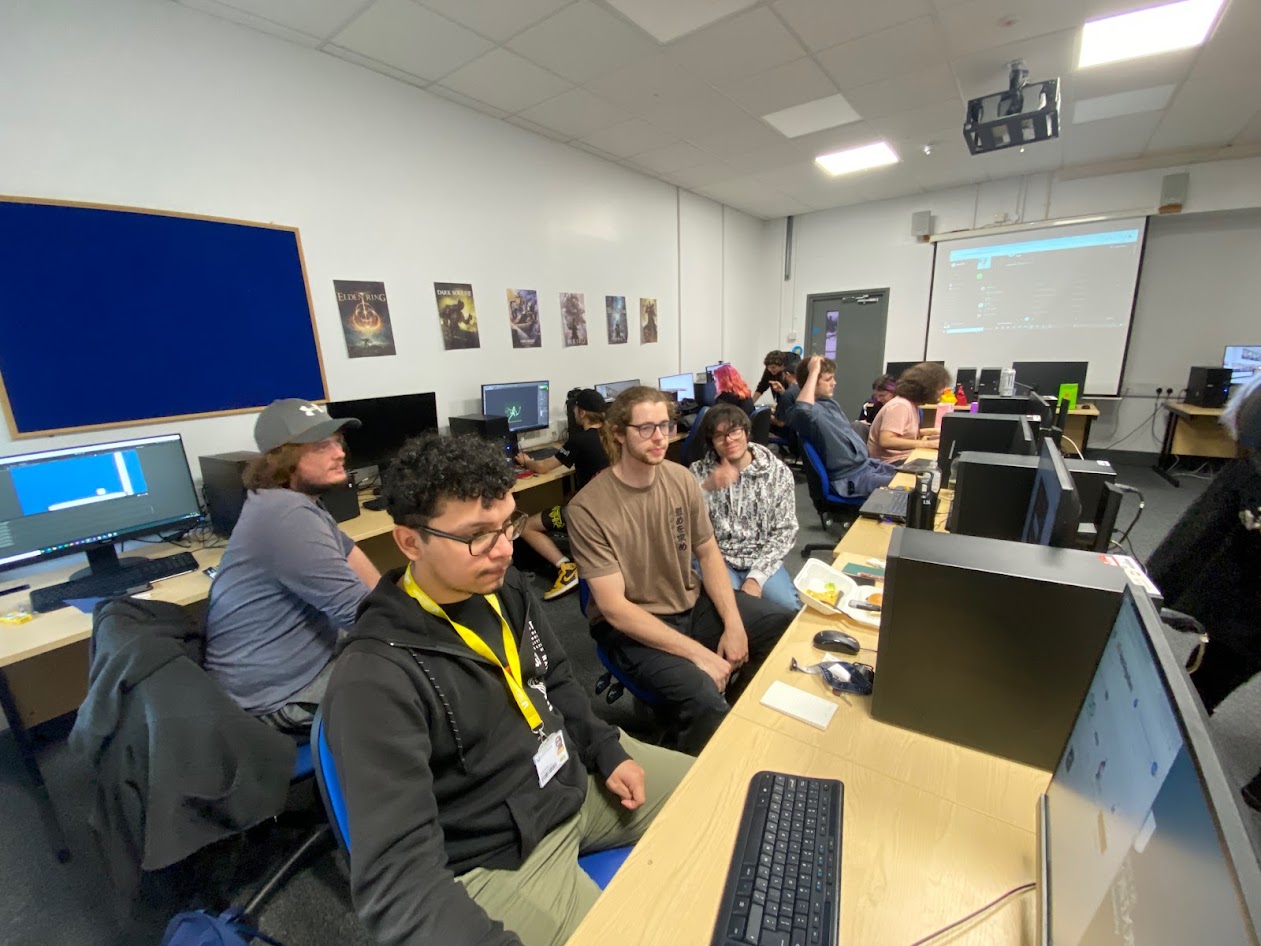
It is important to note that November 2021 marked our first game jam, and that we continued to provide at least one major game jam per year from this point forward - more to follow on that.
I took a short aside in the summer of 2023 to design and approve two new courses for LSFMD: BA Esports, and BA Esports with Livestreaming, which greatly improved my own understanding of curriculum design, and granted me my first Course Leadership position as a full-time member of staff.
And in academic year 2025-26, with everything that we had learned from the previous 6 years of course evolution, the games course team in LSFMD started the ambitious and significant process of revalidating BSc Games, Design and Animation - creating two new defined pathways that leaned into previous strengths while redefining what it means to study games at the University of West London: BA Games Art and Animation and BSc Games Design and Development.
The process of examining this history has put into perspective the many years of dedicated teaching provided by often publicly unrecognised specialists to hundreds of students, creating an unbroken line from those early programmes to the current course team. I would like to take a moment to thank those I have been lucky enough to work alongside, as well as those who came before us.
Our Offer
As a course team we have developed a core offer for what our students are to receive through study.
- Academic success: students should be taught and mentored by specialist lecturers who can confidently deliver both the theoretical underpinnings of a given subject area, as dictated by the module design and within context of the wider design of the course, while also offering pertinent applied examples through their own skilful expertise.
- Lecturer access: students should feel that the course team is accessible and available at times that are mutually agreeable, but more so that we form a central academic support system that starts from day 1 and lasts even after they graduate.
- Community above all: students should feel part of a welcoming, empowered, and vibrant community of fellows who co-mingle, collaborate, compete, and advocate for one another.
- Industry-backed: the course will receive periodic and consistent check-ins with industry partners of various sizes, who will offer up-to-date guidance and mentorship for both the students and the course team.
- Enhancement: students should receive an experience beyond all 4 of these core principles through the ambitious and experimental outlook of the course team, who remain dedicated to trying new initiatives, building new platforms, and never staying still.
While these principles could be said for many course teams, they are embedded into each of the following reasons that I believe that this most recent NSS was so successful. I believe that our just-graduated cohort received our current and best approximation of what these principles mean; especially when considering the context of what staffing, resources, and facilities were available through their experience. But perhaps most importantly, this cohort were almost entirely dedicated towards achieving exactly the same outcomes as we were.
Reason 1: Discord
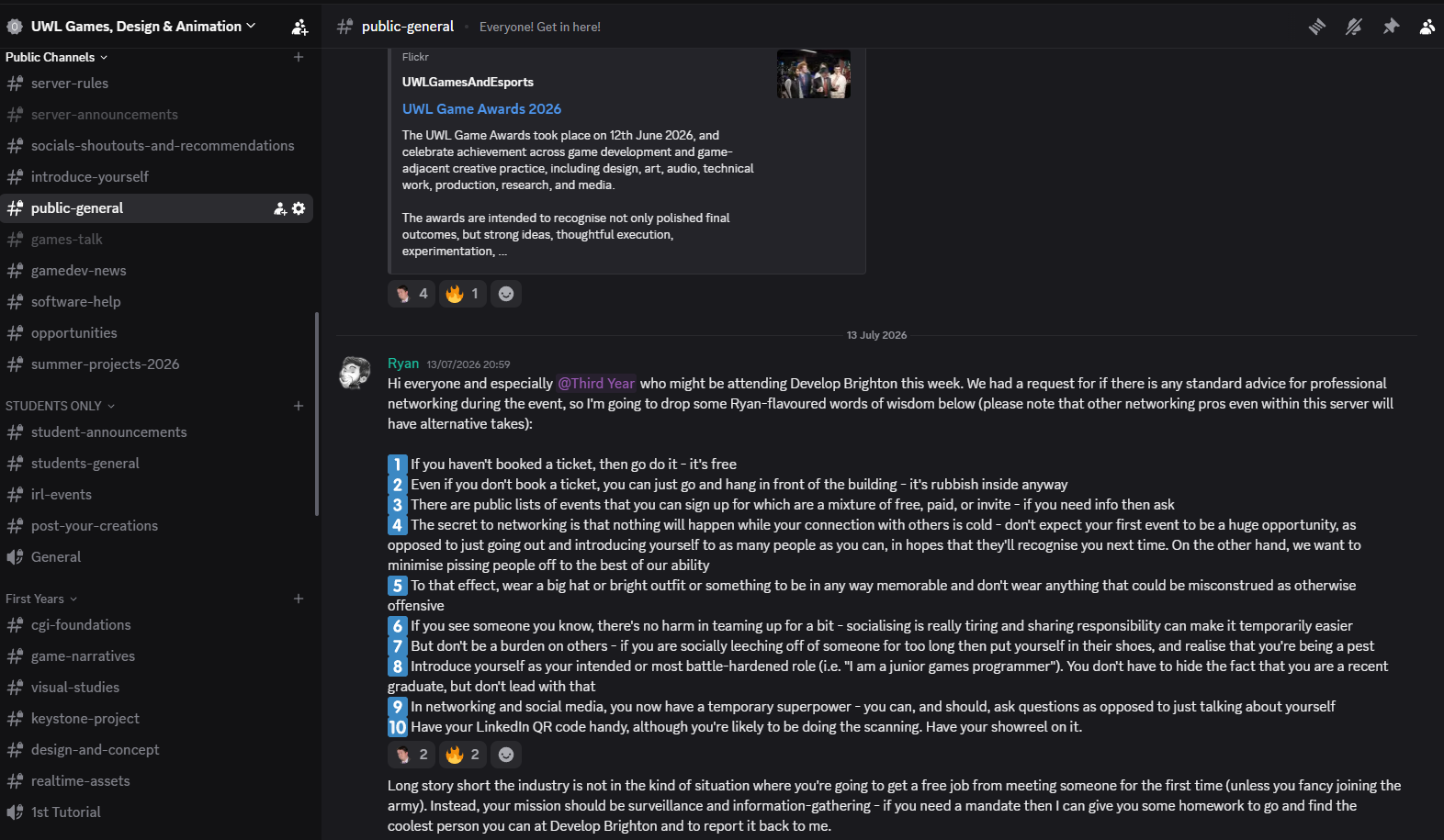
While traditional university communication channels remain essential, Discord provides something different: a space where real-time conversations can continue outside scheduled sessions. Students can share work, ask for technical support, organise teams, discuss opportunities, and generally stay connected. Whether a student needs feedback on an idea, wants to find a teammate, or is looking for advice from someone further along in their studies, they are pointed back towards the community for support.
While discussing Discord with practitioners from other institutions, I’ve heard that others may create separate servers based on courses, or per year of study. For our server, we bring everyone together through careful creation of roles and dedicated channels. An example of our outlook is alumni, who are given a special role and a unique channel, but are also welcome to hold conversations in a limited amount of general channels shared with the student populous - allowing them to remain an active part of the community, and to support the course team through letting everyone know of opportunities, industry news, and personal updates.
Our Discord approach:
- Safeguarding as a priority: students sign up and use their first name for identification. All accounts are vetted manually by sending an internal university email to a course team member before they are permitted to enter the general population of the server. Server activity is monitored through Discord moderation tools, and topics such as personal or interpersonal issues must be raised via email instead of Discord.
- No lecturer DMs: our hardest rule - for the safety of staff and students, all communication between them must take place on the server. There is no such thing as a private channel. Students are able to request a direct line to the lecturers via a “ticket” bot, which creates temporary channels for discussing basic issues, which are then removed and archived automatically upon completion.
- Channels: public channels are for general discussion. Each level of study have a dedicated channel for each of their active modules. Level 6 final major project students have a dedicated channel each for discussion with their supervisors.
- Live support: technical issues, a common issue in game development, can be solved by opening a ticket and requesting live support, wherein a course team member who is free to do so can join a voice channel, share their screen, and hopefully solve the issue.
We also have separated roles and channels for our course reps, allowing for dedicated discussion of upcoming course committee meetings, and an opportunity to bring up any issues directly with the course team outside of personal tutorial sessions. This role shows the course rep in a different colour, improving their visibility within the cohorts and letting students know who they should talk to about course-related issues, and we have found that this also incentivises students to want to take on this additional responsibility.
However, Discord is not a service where course leaders can set up a server and forget about it. As administrators you must be prepared to take action outside of work hours to protect the community. An example may be in the case of a compromised account, which can often be a time-critical threat to the server as the hijacker (whether human or bot) seeks to trick users into clicking dangerous links. This can occur at any time and demands a fast reaction to delete harmful messages and temporarily remove the user from the server.
Reason 2: Major Events
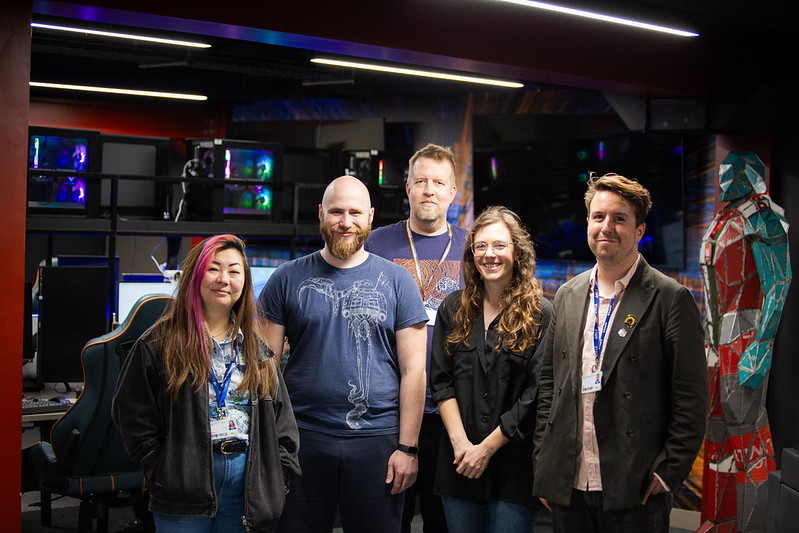
Events are key to the UWL Games and Esports strategy. A well-considered curriculum and graduate outcomes is the bare minimum expected by a student - but any good educator knows that enhancement is key to any teaching strategy, and often takes place outside of the classroom in event spaces.
Game Jams
Since November 2021, we have run annual game jams with steadily increasing prize pools and industry support. These events were immediately popular, offering a unique opportunity for students to work in project teams often spanning year groups, courses, and even across schools within the university.
In 2023, we moved the event into the tail-end of semester 2 and brought in our first major partner, Payload Studios; and have since welcomed ustwo Games (2024), and SEGA Europe and MSI (2025, 2026) to join us as partners and prize sponsors. Since 2025, we have also embedded a second game jam at the end of the first semester in January, which has been strategically positioned to align the Global Game Jam.
Our game jams remain dynamic and experimental in rulesets. The Winter Game Jam has typically aimed to be welcoming to newcomers, and less competitive with smaller or zero prizes, whereas the Summer Game Jam has aimed to be highly competitive and more public-facing with the publishing of news articles and our feature documentary. A difference this year was how teams were built: in the Winter Game Jam the event staff created teams based on requested roles which the students had to then work within, whereas the Summer Game Jam gave students the freedom to make their own in advance of the start date.
Where the game jams ultimately succeed is the student’s own ambition to do the best they can under these challenging and competitive conditions. This makes for an exciting (while profoundly stressful) week of development every 6 months, and even students which may typically struggle with traditional assessment types will come away with the experience of working efficiently within a project team - perhaps even moreso than where group work is assessed.
While we have ever-greater ambitions for the game jams, especially the Summer edition, we have enjoyed record sign-ups, including students from 4 schools (London School of Film Media and Design, School of Computing and Engineering, London College of Music, and School of Law) and almost 10 courses. The quality of sponsorship and prizes have also been of a very high level, with thanks to our dedicated game jam partners who volunteer time to join us for the event.
You can find out more about the most recent Summer Game Jam, with partners SEGA Europe and MSI, by visiting gamejam.studygame.dev.
UWL Game Awards
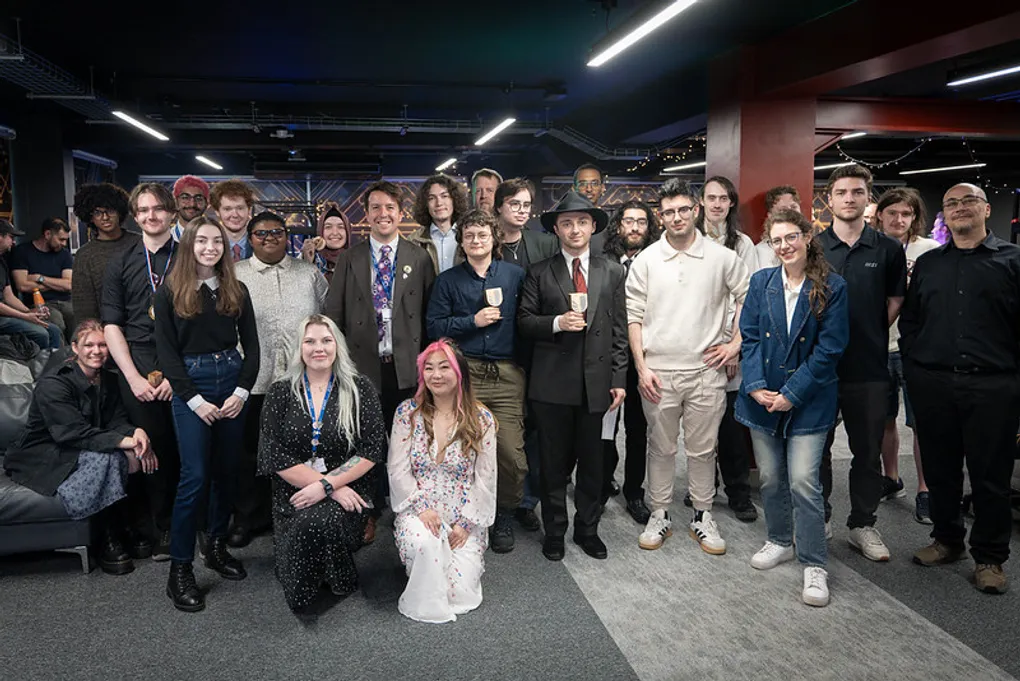
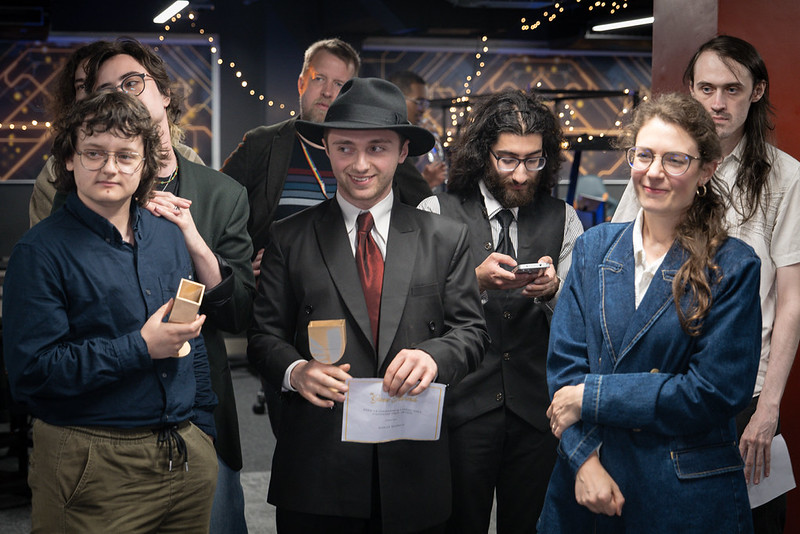
A new addition for 2026, the UWL Game Awards is a formalised ceremony which awards excellence across a set of specialist roles: from design, to art, to programming, and peer leadership.
The inaugural event began with a red carpet event, followed by a student showcase, and ended with an hour-long formal presentation of awards including prepared media and speeches from subject and course leaders, industry partners, and (of course) the students themselves.
Continuing a trend from previous years, the Summer Game Jam documentary preview was played in advance of the winners being announced - a highly successful addition which gives participants a chance to enjoy a retrospective culmination of their hard work months before the general public.
Visitors and guests reacted incredibly positively to the awards show, with leaders from other courses noting the strength of the UWL Games and Esports community, and how they could see how much the awards meant to the student body - and not just to the victors.
You can find out more about the most recent UWL Game Awards at awards.studygame.dev.
Student and Lecturer-Led Community Events
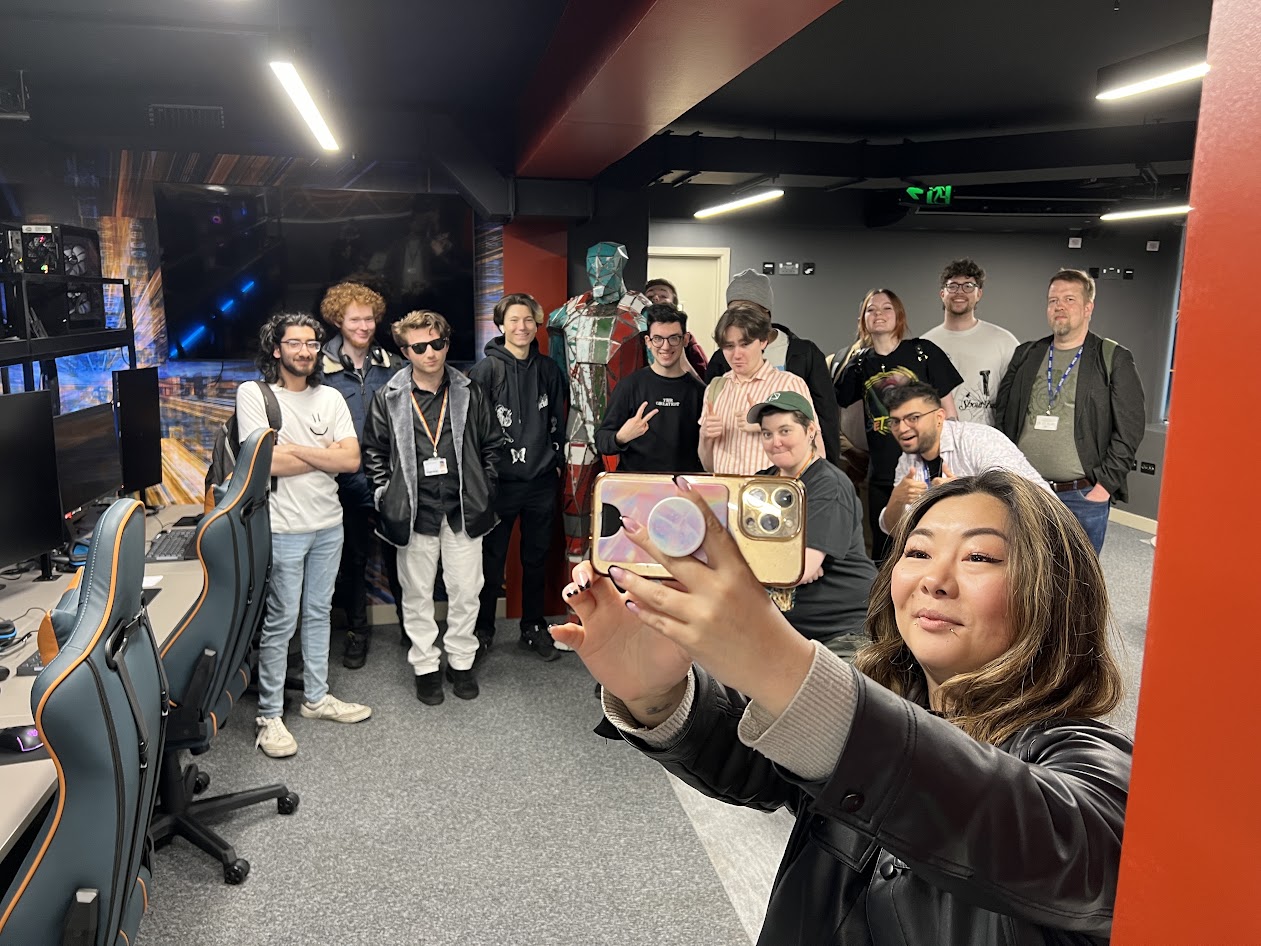
Alongside larger events, smaller community activities have become just as important, and have created opportunities for students to connect outside their usual modules.
Since September 2025, this has been achieved through the “Weekly Wednesday” format - a strategy that involves the block-booking of our premier Digital Futures Lab space for the entirety of Wednesday afternoon. This was used for a variety of events during the academic year: from Magic: The Gathering competitions, to VR events, to Warhammer battles, or just a chance to catch up with assessments.
Staff-led events included the “Character Jam”, which had students compete to create characters belonging within their unique take of Arthurian legend, and the Games Christmas Quiz - a highlight of semester 1 which features special rounds designed by each of the attending lecturers (mine was a particularly mean puzzle design inspired by Blue Prince - can you figure out the password from the clue below?)

Reason 3: Community Beyond The Campus
Microsites
Another major focus has been creating dedicated digital spaces to showcase our offering as a course team, and to celebrate student achievements publicly.
Rather than treating projects as something that disappears after assessment, we have developed a collection of microsites that help document and share the work produced by our students:
- gamejam.studygame.dev provides a home for our Game Jam events, documenting themes, projects, and the creative process behind them.
- awards.studygame.dev celebrates student achievements through the UWL Games Awards, recognising excellence across development, art, audio, design, research, and community contribution.
- wednesday.studygame.dev supports our Weekly Wednesday sessions, creating a central place for talks, activities, and student-led events.
Each of these sites is built with a single purpose in mind, but over time have gained additional depth - particularly in their ability to archive previous events, providing students a digital address to point friends and potential employers to — “I worked on this game jam, here’s the event page, here’s the team photo, here’s the documentary, here’s the game submission, here’s the judges”.
These microsites have been an experimental approach to documenting and amplifying what we do, and have received multiple iterative changes to bring them in line with the policies of the institution and demands of our students. However, owed to the guidance received from a wide range of different stakeholders, we believe that this project has been a huge success across this academic year - and we now feel empowered to further develop this special slice of the internet for many years to come.
An additional benefit of the microsites has been improved discoverability and ownership of our story. Institutions such as ours can invest heavily in marketing materials and press releases, but initiatives are often distributed across hundreds of courses, schools, and priorities. A central marketing approach can communicate the existence of these activities, but rarely has the space to capture the detail, personality, and community behind them.
Our microsites have given us the ability to tell these stories directly: creating focused resources for specific audiences while preserving the authentic voice of the course team and the achievements of our students.
Socials
Another new initiative for this academic year was the birth of our own UWL Games and Esports social media pages, serving TikTok, YouTube, Instagram, and LinkedIn.
Each member of the course team had roles in social media marketing in a previous life (both including and excluding indie game development), and have the skills to create engaging content. This year alone, we have developed over 100 pieces of original content that showcase student work, discuss study of games topics, and share our day-to-day as games academics.
We have also been supported by students, who have jumped at the opportunity to be featured on our pages. Each of our Level 6 students were given the opportunity to present their final major projects for a short documentary, which will each release over the summer break. The student leading the Warhammer “Weekly Wednesday” session volunteered to discuss the game in front of the green screen (both videos did well across TikTok and YouTube, with well over 1.6k views on each platform between them).
While the microsites provide a permanent archive, social media provides the opportunity to bring these stories into active conversations with prospective students, industry partners, and the wider games community. Students and applicants increasingly understand these platforms as part of the identity and reputation of the course, and are keen to be involved and featured as active members of the community.

In Conclusion
The NSS results are a reflection of the work done by everyone involved: students who participate, collaborate, organise, and support each other; and staff who continue to create opportunities for students to grow.
There is still plenty more to do. Our community has only just begun, and every year brings new opportunity for further development on the results of the previous year.
However, these results demonstrate something we have believed for a long time: if we’re going to be a competitive offer for games, then offering a high level of teaching is only a small part of what gets students excited about being on their course.
Students don’t just want to be taught, assessed, and then graduate. They want something more - to be part of a modern, evolving community which lasts far beyond their time in university.
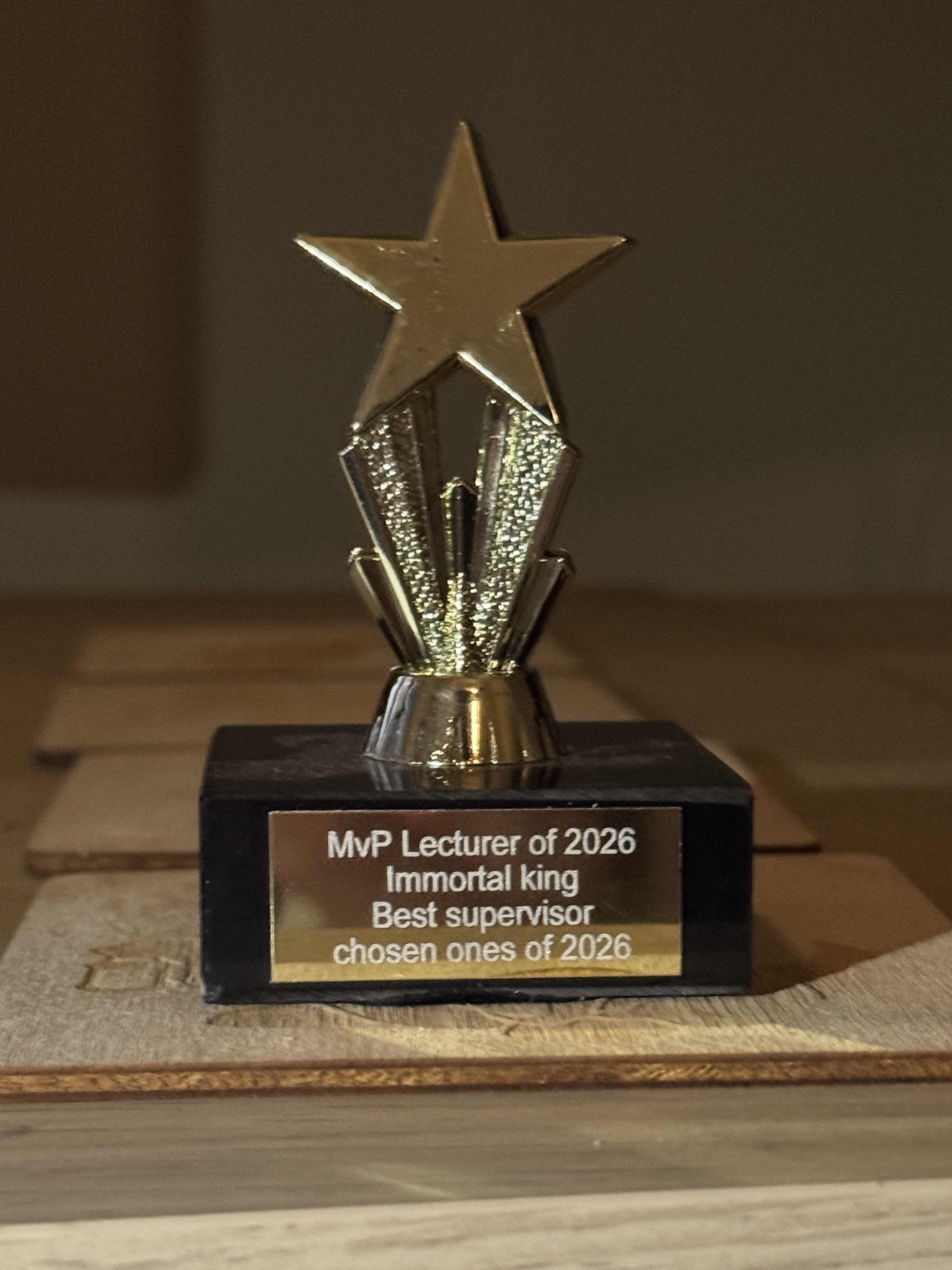
I wouldn’t have the confidence to say that everything we have built within the UWL Games and Esports courses directly resulted in the most recent NSS results. It could simply be that we spent three years referring to this cohort as “the chosen ones”, and that in turn they gave us an unforgettable farewell gift.
However, what I can say with confidence is that the team believes building this community has been the real achievement of our tenure so far. The results are a fantastic recognition of that work, but our ambition goes beyond a single survey cycle: we want to continue developing this community into one of the strongest games education communities in the UK.